Dadyal, part of Mirpur District in Azad Jammu & Kashmir, has always been a land of hardworking, family-oriented people. Known for its fertile land, traditional farming, and strong values, Dadyal has also produced leaders, soldiers, and professionals who have carried its name far beyond its borders.
Migration Before 1947 – Ships & Early Links
Even before Pakistan was created in 1947, people from Dadyal were venturing overseas. Many joined the British merchant navy, working on ships that traveled across the Middle East, Africa, and Europe. A number of them rose to positions of supervisors and foremen, respected for their discipline and leadership.
For example, my grandfather (on my mother’s side) proudly served as a supervisor in the merchant navy, earning respect not just for himself, but for the reputation of the people of Dadyal.
Dadyal in the British Army & World Wars
Many men from Dadyal also served in the British Royal Army, fighting in World War I and World War II. They achieved high ranks, earned medals for bravery, and brought international honor to their homeland.
My great-grandfather (my grandfather’s father) served in the British Royal Army, and his achievements were officially honored by the British military — a lasting source of pride for our family and for the wider community.
After independence, this tradition of service continued. Many from Dadyal joined the Pakistan Army, where they fought with honor in national conflicts and earned recognition. Today, sons of Dadyal still wear the uniform proudly, defending the country’s borders.
Ramkot Fort – Heritage by the Lake
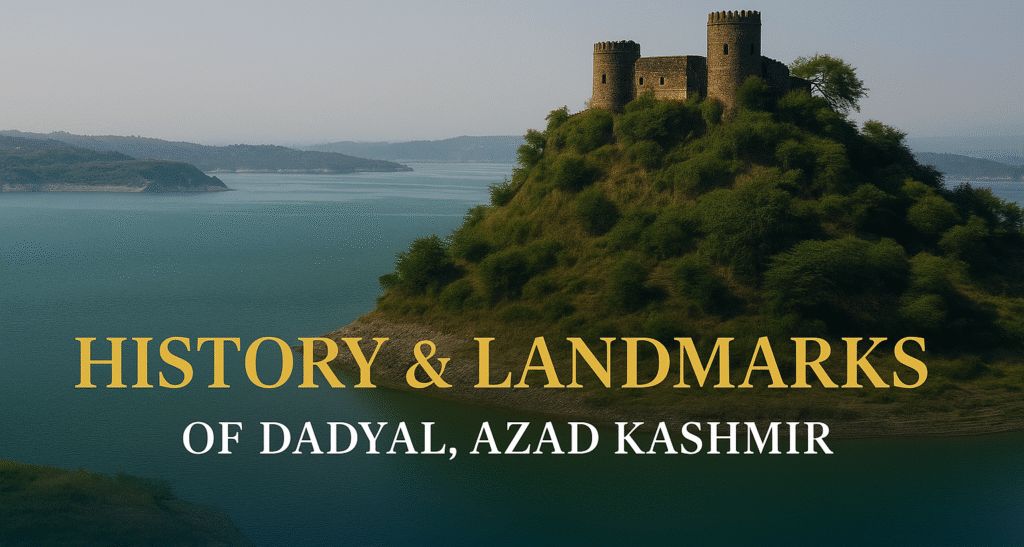
At the meeting of the Jhelum and Poonch rivers, Ramkot Fort stands as a monument to the region’s strategic past. Built in the 16th–17th centuries, it once protected trade routes. Now, surrounded by Mangla Lake, it is one of the most iconic tourist attractions in Azad Kashmir.
Bridges – Connecting Communities
Palak Bridge (Poonch River): A steel truss bridge linking Mirpur, Kotli, and Dadyal, vital for local transport.
Dhan Gali Bridge (Jhelum River): Once a suspension bridge, now a modern two-lane structure (2011), uniting communities separated by Mangla Lake.
Mangla Dam & the Great Sacrifice
The construction of Mangla Dam (1961–1967) provided power and irrigation for Pakistan but displaced around 110,000 people from more than 280 villages, including parts of Dadyal. Families lost land, homes, mosques, and even ancestral graveyards that still lie beneath the reservoir.
In return, planned towns like New Dadyal were built, but the emotional loss remains part of the identity of its people. Many used this time as an opportunity to migrate abroad, especially to the United Kingdom.
Diaspora & “Mini England”
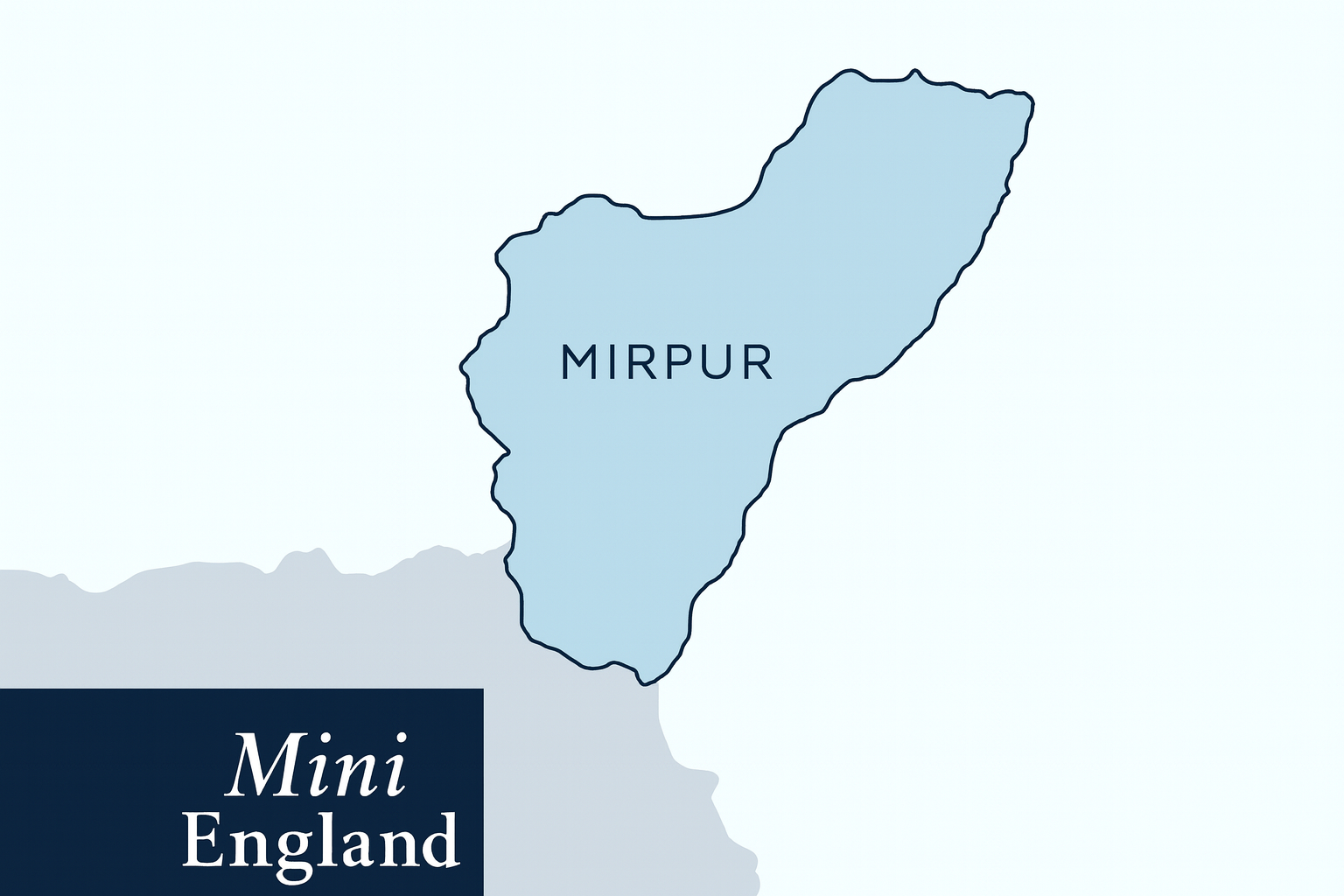
Dadyal is now part of the famous “Mini England” region because of its strong ties with the UK. Migration came in stages:
Pre-1947: Merchant navy and British Army service.
Post-1947: Early workers in industry and construction overseas.
1960s–70s: Mass migration during Mangla Dam resettlement.
Achievements Across the World Today
Even today, the people of Dadyal continue to achieve success internationally. Overseas Dadyalis have become:
Business owners and entrepreneurs in the UK, Middle East, and beyond.
Doctors, engineers, and academics, contributing to science and education.
Politicians and community leaders, serving in councils and parliaments abroad.
Builders and professionals who helped establish Britain’s modern cities.
Philanthropists, funding schools, hospitals, and community projects back home.
Their achievements show that the spirit of Dadyal is not limited to history — it continues to shine in every generation, across all capacities and professions worldwide.
Identity & Resilience
From forts and bridges to war medals and overseas achievements, the people of Dadyal have always proven their strength. They sacrificed their lands for Mangla Dam, fought in world wars, served both the British and Pakistan armies, and today continue to achieve success across the globe.
At home or abroad, they carry their love for family, land, and heritage — making the name of Dadyal known internationally with pride.