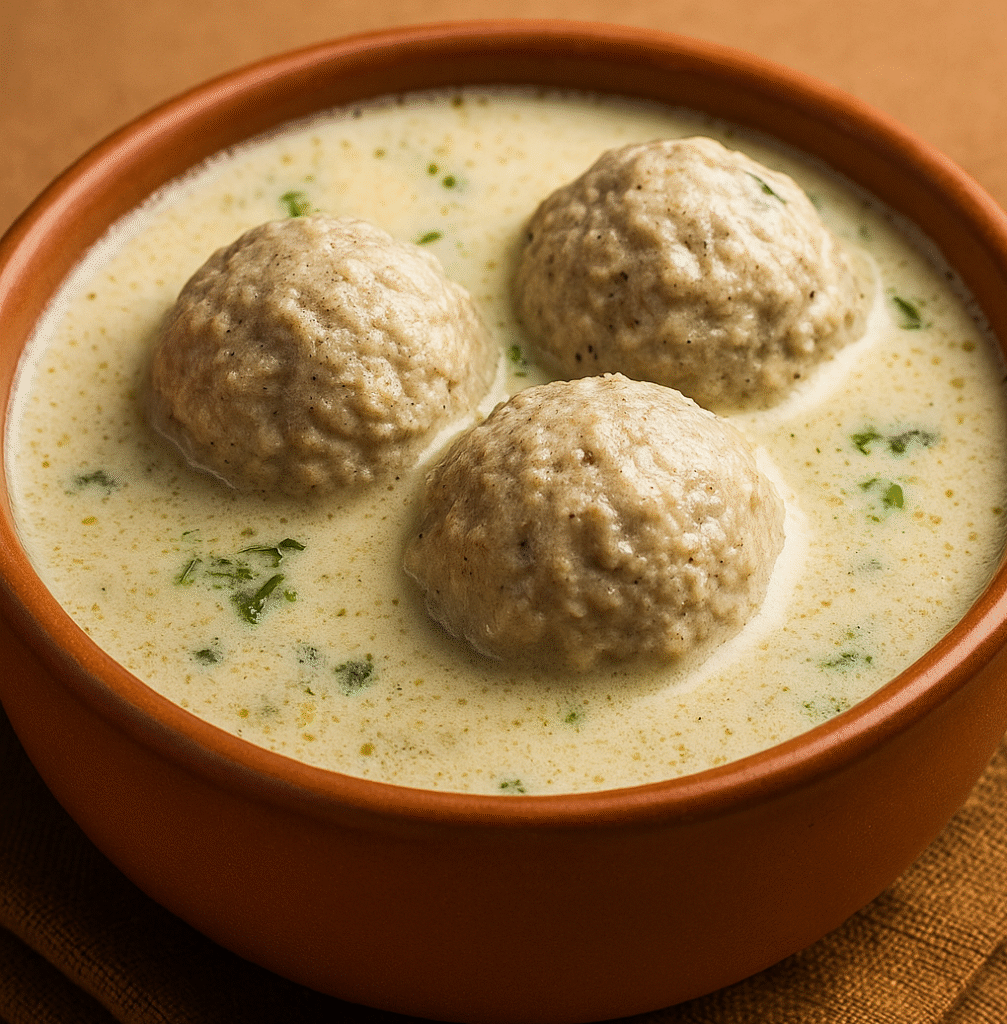
Gushtaba is one of the most iconic dishes of Kashmiri cuisine, often described as the “dish of kings.” It holds a special place in the traditional Kashmiri Wazwan, a multi-course royal feast that symbolizes culture, celebration, and hospitality. This dish is usually served at the end of the feast, marking a grand conclusion to the elaborate meal, and it reflects the artistry of Kashmiri chefs, known as wazas.
The main highlight of Gushtaba is the large, tender meatballs made from finely minced mutton. The meat is pounded until it becomes a smooth paste, which is then shaped into round balls. This process requires patience and skill, ensuring the meatballs are soft yet firm enough to hold their shape while cooking. The preparation itself is considered a traditional craft passed down through generations.
What makes Gushtaba truly special is the rich, creamy yogurt-based gravy in which the meatballs are simmered. The gravy is flavored with delicate spices such as cardamom, fennel, ginger, and garlic, creating a smooth texture and aromatic taste. Unlike fiery curries, Gushtaba has a mildly spiced flavor profile, allowing the natural taste of the mutton and yogurt to shine through.
Culturally, Gushtaba is more than just a dish—it is a symbol of Kashmiri hospitality and pride. Serving Gushtaba at weddings, festivals, or important gatherings shows respect and honor to the guests. Its royal status within the Wazwan makes it a dish that is both revered and eagerly awaited by those attending traditional feasts.
Today, Gushtaba continues to be celebrated not only in Kashmir but also by food enthusiasts across the world who appreciate authentic Kashmiri cuisine. Its preparation may be time-consuming, but the result is a dish that blends tradition, taste, and heritage. Gushtaba stands as a proud representative of Kashmir’s rich culinary culture, making it one of the most treasured foods of the region.