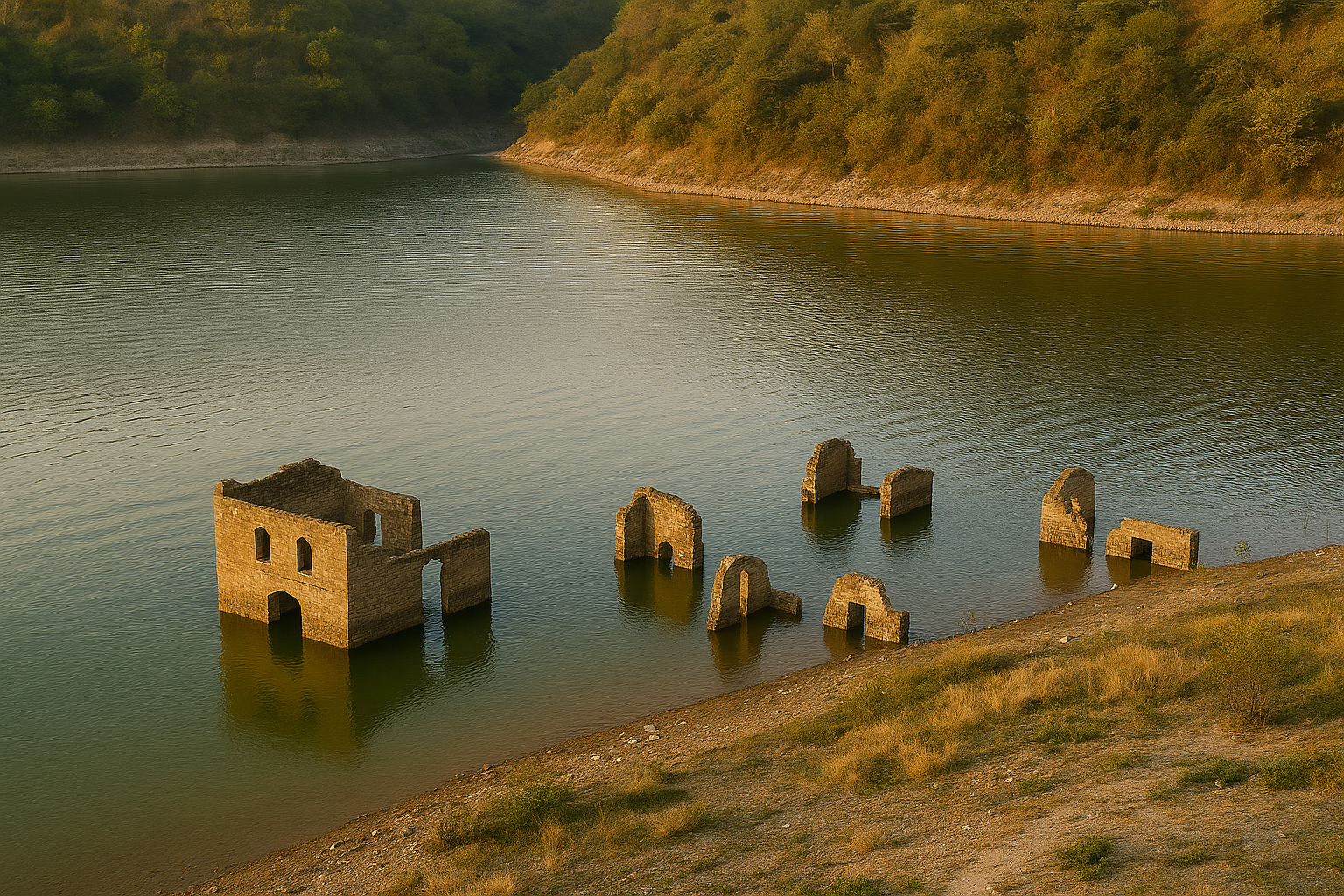
Beneath the calm blue waters of Mangla Lake lie the Submerged Villages—the old homes, lanes, mosques, and marketplaces that once formed the living heart of Dadyal and Mirpur. These are not just places lost to time; they are chapters of memory, kept alive in stories, photographs, and the hearts of families who rebuilt their lives on new shores.
Water, Progress, and Parting
When the Mangla Dam rose, entire settlements were carefully relocated. The lake brought irrigation, electricity, and a new future for Pakistan—yet it also carried a deep cost: farewell to ancestral streets. For many, the shoreline became a border between what was and what would be—progress above the water, remembrance below it.
A Town Remembered
Old neighborhoods now rest in silence under the reservoir: stone houses, courtyard wells, mud-brick walls, and narrow bazaars where voices once echoed at dawn. On exceptionally low-water days, hints of foundations appear—a wall line, a step, a corner of a lane—reminders that a living world still sleeps beneath the surface.
Diaspora and the Thread of Home
The Dadyal–UK connection was strengthened by this turning point. Families who moved abroad carried with them keys to doorways that no longer exist, prayer beads from village mosques, and wedding photos taken on streets now claimed by water. In new cities, they built mosques, businesses, and community centers—yet every visit back to Mangla’s edge rekindles the quiet ache of belonging and loss.
Heritage in Stories
Because stones are hidden, memory became the archive:
Family narrations of harvest seasons, winter fires, and Eid gatherings.
Names of lanes and elders, recited like a rosary.
Recipes, lullabies, and proverbs that kept the village alive in distant kitchens and living rooms.
Each retelling is a form of preservation—oral history as architecture.
Seeing What Cannot Be Seen
Visitors often take boat rides across Mangla’s expanse, guided by locals who point to where mosques stood, schools opened, and fairs were held. Sunset paints the water in amber; the lake becomes a mirror, and for a moment one feels the outline of a town re-emerge—a geography of memory mapped by gestures and longing.
(If you plan to add a visitor note, include light guidance about hiring licensed boats, respecting safety rules, and avoiding litter.)
Respect, Dignity, and Preservation
The Submerged Villages deserve quiet respect. They are sites of both national progress and personal sacrifice. Community groups increasingly document elder testimonies, digitize old photographs, and mark approximate village sites on heritage maps—transforming private grief into shared remembrance and education for the next generation.
Why This Story Matters
The Submerged Villages teach us that development and memory must walk together. Dadyal’s strength is not only in what was built anew, but in how tenderly it remembers what it gave up. To stand by Mangla’s shore is to feel two timelines meet—the promise of the present and the pulse of the past—held together by the love of a people who never forgot their first home.